top of page

Search
Flexural Testing


ASTM E290 Complete Guide: Bend Testing Metals for Ductility, Span, Fixtures and Crack Evaluation
How to run ASTM E290 bend tests for ductility: the four methods, specimen and edge rules, span C = 2r + 3t, angle and springback, crack evaluation, a worked force example, ISO 7438 differences and the right fixtures and machines.

Chris Thomas
Nov 721 min read


ASTM D2344 Complete Guide: Short-Beam Shear Specimens, 4:1 Span, Fixtures and Failure Modes
How to run ASTM D2344 short-beam shear tests correctly: specimen sizes and the 4:1 span, fixture cylinders, 1.0 mm/min, sizing a Mark-10 or Galdabini machine, valid failure modes, a worked ILSS example, hot/wet testing, ISO 14130 and FAQ.
Chris Thomas
Nov 519 min read


Advanced Ceramics Testing: ASTM C1161, C1211, C1273, C1684, C1499 and C1341
A map of ASTM strength tests for advanced ceramics: C1161 and C1211 bar flexure, C1684 rod flexure, C1273 tension, C1499 ring-on-ring and C1341 for CMCs, with fixtures, specimen sizes and common mistakes.
Chris Thomas
Oct 283 min read


Rebar and Steel Testing: ASTM A615, A370, E8 and E290 Tensile and Bend Tests Explained
How ASTM A615, A370, E8, E290 and E23 fit together for rebar and steel testing: full-section rebar tensile tests, bend pin diameters, guided bend methods, E8 strain rates, Charpy impact, and the grips and fixtures each test needs.
Chris Thomas
Oct 214 min read


Sandwich Panel Testing: ASTM C393, C273, D7249, C297, C364 and C365 Explained
Which sandwich panel test measures what: core shear by C273 plate shear and C393 beam flexure, facing strength by D7249 long beam, flatwise tension C297, flatwise compression C365 and edgewise compression C364, with formulas, setups and fixtures.
Chris Thomas
Oct 204 min read


3-Point vs. 4-Point Bend Testing: ASTM D790, D6272 and C1161 Explained
The difference between 3-point and 4-point flexural testing, with spans, speeds, formulas and fixtures for ASTM D790 (plastics), D6272 (4-point plastics) and C1161 (ceramics), plus common mistakes and videos.
Chris Thomas
Oct 156 min read
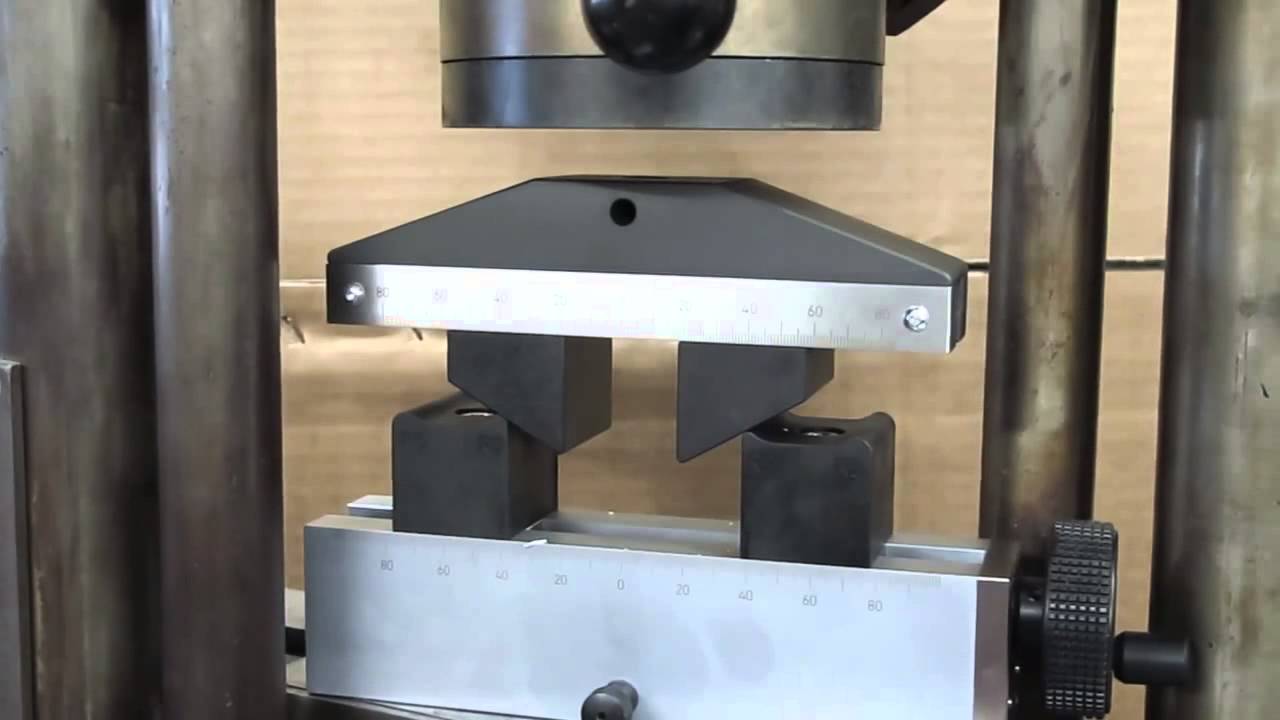
ASTM C1161: Standard Test Method for Flexural Strength of Advanced Ceramics at Ambient Temperature
Introduction to ASTM C1161 Advanced ceramics are widely used in applications where high stiffness, thermal stability, wear resistance, and chemical inertness are required. Unlike metals or polymers, however, ceramics exhibit little to no plastic deformation and fail in a brittle manner. Because of this behavior, traditional tensile testing is often impractical or unreliable for ceramic materials. Instead, flexural strength testing has become the primary method for characteriz

Mark Edwards
Jan 307 min read
bottom of page